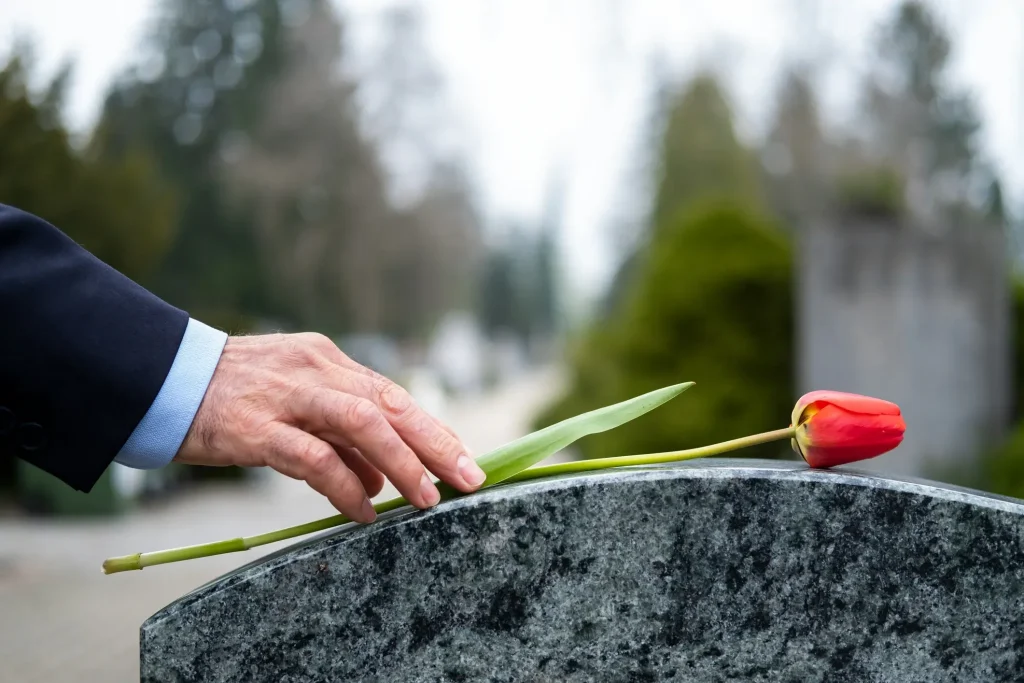
A common question that families ask after a funeral is how quickly can a headstone be arranged? The truth is, it takes longer than most people think, in part due to cemetery regulations, and in part because a good memorial can’t be hurried. Here is a realistic view of what the process typically entails.
Why the waiting period before installation?
Most cemeteries will not let you place a permanent headstone right after a new burial. Usually you have to wait around six months. The timeline can stretch, depending on the soil and how the grave was prepared. If the ground shifts later, a heavy stone can end up leaning or sinking. For that reason, a careful mason avoids setting a large memorial until the site has fully settled.
What is happening at the Design Stage?
Initial Consultation
This is typically where a family will meet with the mason, either face-to-face or on the phone, to discuss their needs. At this stage, questions include what kind of stone, what shape of memorial, any symbols or motifs that are meaningful, and the wording for the inscription.
Draft and Revisions
A mason will typically put together a sketch or proof showing how the finished headstone will look, including the exact layout of the lettering. Here, families may make a few minor edits, such as changing the wording, spacing, or a detail in the design, before approving a final version.
Sourcing the Stone
After the design is settled, the stone must be obtained and prepared. This can take from a couple of weeks to a couple of months, depending on the type of granite or marble selected, and whether it has to be imported or is readily available.
What is the actual time for the stonework?
Skilled, unhurried work is involved in hand cutting lettering, carving motifs, and polishing a memorial. An engraved headstone with a simple design may be finished in a couple of weeks after the stone is received. A larger and more detailed memorial will naturally take longer, as there is more craftsmanship involved, such as a kerb set, hand carved imagery or gilded lettering.
Permits and Paperwork
The administrative side of the stonework is also a parallel process: applying for the cemetery permit, ensuring that the design complies with local regulations, and scheduling the installation date. This process is normally handled by a mason who regularly works with councils like South Tyneside Council and Newcastle Council, and this will save a lot of back and forth for the family.
Putting It All Together
Families can generally look forward to a period of between two and four months from the initial design discussion to the finished, installed headstone, although this may be longer for more intricate bespoke designs and shorter for simpler designs after the settling period of the cemetery. Any mason you talk to will have their own realistic estimate, as workloads and stone availability vary from year to year.
Are the seasons a factor in the length of the process?
A small but real difference can be made by timing within the year. Sometimes, the cold weather in the North East can slow down the outdoor installation work, especially when the weather is cold and wet for long periods of time, as a mason requires stable and workable ground conditions to lay a proper foundation. There are also times of the year when many masons notice an increase in enquiries, such as shortly after the anniversary of a loss, which can impact the speed of a consultation.
None of this should deter you from beginning the process when it feels right. It just means that if you ask a mason directly about their current workload and realistic timeframe, instead of assuming a fixed number of weeks, you will get the best picture for your situation.
Why Patience Usually Pays Off
After the settling period of the cemetery, it may be tempting to want everything done as soon as possible. However, rushing the final stages of a bespoke memorial, forcing a mason to cut the stone or source it quicker than they would like, does not usually yield a better outcome and can sometimes result in a less thought out design than you would have liked. Families who give the process its full, unrushed time are more likely to be satisfied with the final memorial, just because no part of the process was rushed to fit an artificial deadline.
What impact does hand craftsmanship have on the schedule?
Beyond the price point, it’s important to understand why hand-cut lettering and carved detail is actually more time-consuming than a machine-engraved option. A master mason, working by hand, determines the depth, angle and spacing of each letter, adjusting the parameters as he goes to suit the grain and hardness of the stone he is working with.
The reason why rushing the stonework rarely ends well.
In hand-carved or hand-lettered work, speed and accuracy are in conflict, and rushing for a quick finish is a real danger. If a mason is asked to work on a project that requires weeks of meticulous carving and is required to finish it in a much shorter time, he may have to resort to a more rapid and less detailed method to get the job done on time, and thus lose the very attributes that made a bespoke design appealing in the first place.
What Can You Do While You Wait?
The waiting time doesn’t have to be a waiting time. If a laser etched portrait or ceramic plaque is being planned, many families use it to bring together old photographs; if they are thinking of collecting memories or favourite sayings to include in the inscription, or just to visit the grave with a temporary marker while the permanent memorial is being created behind the scenes.
Conclusion
A custom headstones South Shields is not something that can be completed in a single day. The process takes a few months, including the settling period of the cemetery, the design discussions, the sourcing of stone and the hand craftsmanship.
Leave a Reply