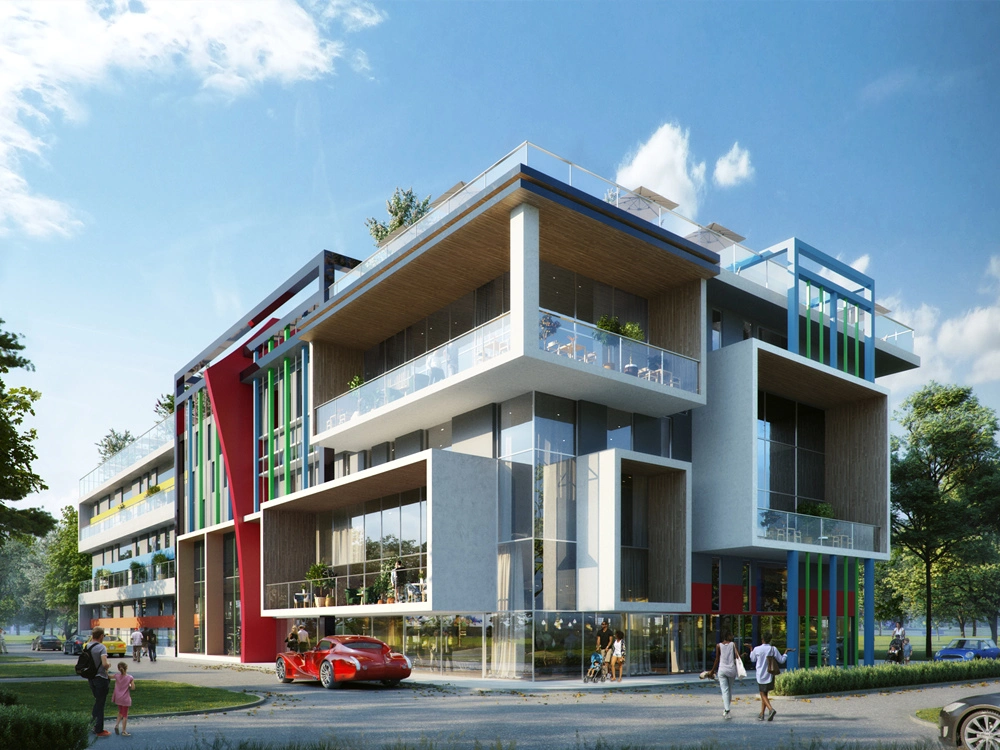
The same building can feel welcoming, dramatic, or quiet depending on how it is lit and what the sky is doing. Light and weather are not decoration, they are storytelling tools. A thoughtful 3D exterior rendering service chooses the time of day and atmosphere to match the design’s purpose, whether it is a bright cultural center, a serene housing block, or a dramatic landmark. Competition teams know this well, since entries to international architecture competitions often hinge on a single memorable image. This article explores how daylight, dusk, and weather shape the mood of an exterior view and how to choose the right atmosphere for your project.
Daylight and Its Variations
Midday sun produces strong contrast and clear shadows, which helps show form and material. It suits projects where crispness and clarity are the message.
Early morning and late afternoon light is softer and warmer. Long shadows add depth and drama to facades, and the golden tones make buildings feel inviting.
Overcast skies create even, diffused light that suits calm, understated architecture and reveals subtle material detail.
Season and location also influence mood. A bare winter tree line tells a different story from lush summer foliage, so make sure the vegetation and sky suit both the location and the message of your design.
Think about the human experience. People, shadows, and small activity cues such as cyclists or open doors suggest how the place will feel in use, adding warmth to the lighting you choose.
The Power of Dusk in Exterior Rendering
Dusk or twilight scenes often become hero images. As the sky deepens to blue, interior lights glow through windows and exterior lighting adds sparkle.
This contrast makes buildings look alive and welcoming. It also shows how a design works at night, which matters for hospitality, cultural, and public projects.
Balance is key. Too dark and detail disappears, too bright and the effect is lost.
Artificial lighting is part of the design, not an afterthought. Warm window light, accent lighting on facades, and path lights all contribute to the sense of life around a building, so coordinate them with your lighting strategy.
Weather and Atmosphere
Light mist, soft clouds, or a dramatic sky can add emotion. Rain reflections on pavement can make an urban scene more cinematic, while snow can emphasize silence and form.
Use these effects with intent. They should support the concept rather than distract from it, and they should be appropriate to the location.
Aimir CG describes its work as top-tier exterior visualization where precision meets stunning visuals. Reading industry news about each 3D exterior rendering service can give you ideas about current visual trends and styles.
Weather should enhance, not hide, the architecture. If clouds or mist obscure key features, adjust them until the design remains clear. The aim is atmosphere with legibility.
Choosing the Right Mood
Ask what the building should feel like and who will see the image. A family home might benefit from warm, welcoming light, while a corporate headquarters might suit crisp, clear conditions.
Request alternative views if the budget allows, such as a day and dusk pair, to give your presentation range. Looking ahead, flexible digital models make it easy to generate multiple moods from one scene.
Keep a library of reference photographs that capture the mood you want, and share it with the studio so everyone aims at the same feeling.
Do not over process the final images. Subtle color grading and contrast adjustments are helpful, but heavy effects can make a scene look artificial and distract from the design.
Conclusion
Mood is a design decision. Choose lighting and weather that reinforce your concept, and work with a 3D exterior rendering service that treats atmosphere as part of storytelling. For international architecture competitions, a well judged mood can make your entry unforgettable.
Leave a Reply